
Friction, Fuel, and the Future: Elon Musk's War on the Limits of What's Possible
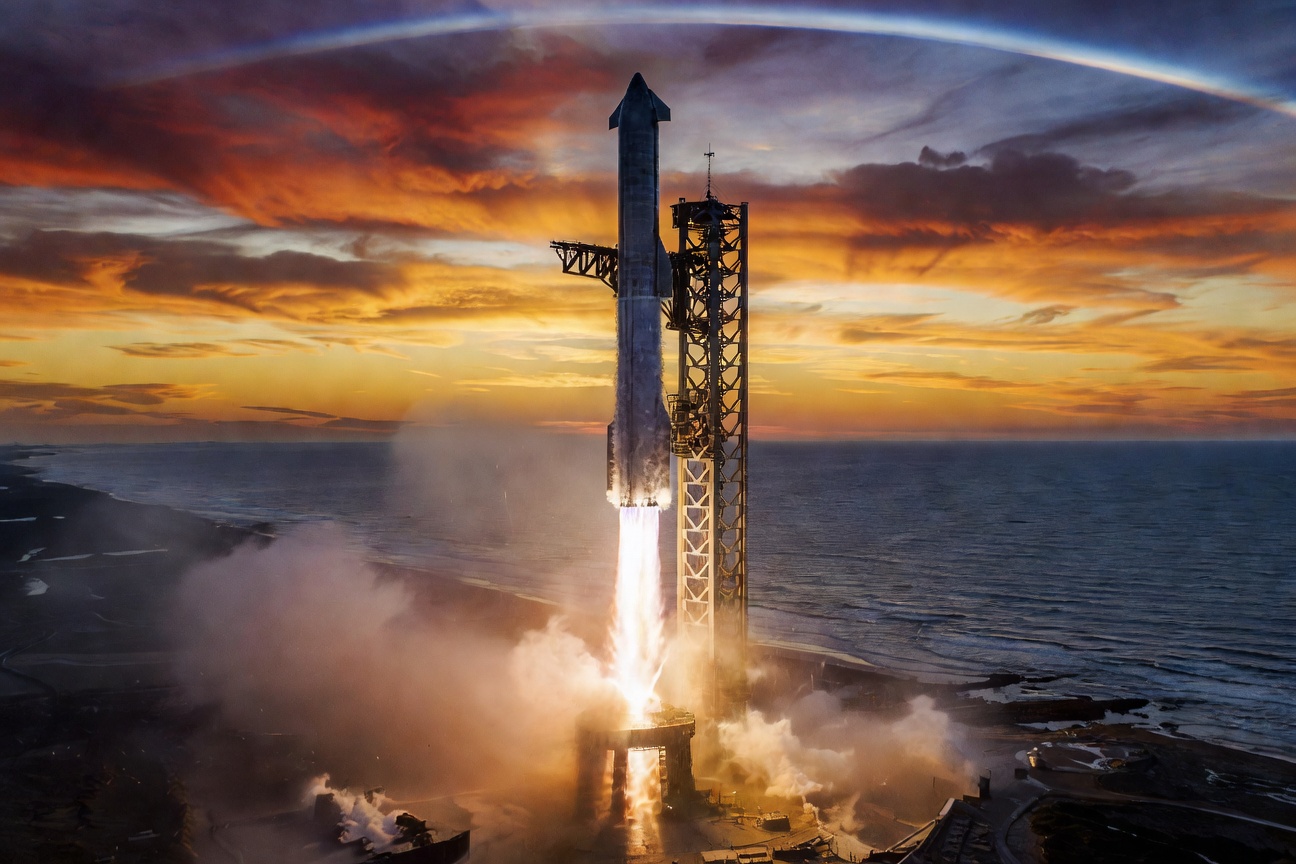
There's a particular kind of tension that follows Elon Musk everywhere he goes these days, a tension between the sheer audacity of what he's attempting and the cold, unforgiving reality of physics, politics, and human capital. In the past several weeks alone, Musk has outlined updated timelines for Starship's orbital cadence, doubled down on xAI's ambitions to surpass every existing large language model by year's end, hinted at a new Tesla product announcement that has analysts scrambling, and publicly weighed in on the geopolitical implications of autonomous systems. For a man running five transformative companies simultaneously, the pace isn't slowing. If anything, it's compressing.
The question worth asking, not with cynicism but with genuine analytical rigor, is this: which of Musk's current bets are hitting real traction, which are grinding against genuine engineering walls, and what does the long arc of these efforts mean for the rest of us? Because the outcomes of these ventures are not confined to stock tickers or tech blogs. They reach into medicine, energy, transportation, communication, and the very trajectory of human civilization.
Starship and the Brutal Arithmetic of Mars
SpaceX's Starship program continues to be the most technically demanding undertaking in modern aerospace history, and Musk has been unusually candid about both its progress and its remaining obstacles. In recent public statements and appearances, he has reiterated that full and rapid reusability, meaning catching the Super Heavy booster with the launch tower's mechanical arms and relaunching within hours rather than weeks, is the single most critical milestone before Mars missions become economically viable. The Mechazilla catch system, which succeeded in late 2024, was not a publicity stunt. It was proof of a principle that the aerospace establishment had considered borderline reckless.
But the engineering challenges ahead are substantial. Starship must achieve reliable orbital insertion, on-orbit propellant transfer (a technology that has never been demonstrated at scale), and survivable reentry of the ship itself during return from deep space trajectories. Musk has acknowledged that propellant transfer remains the hardest near-term problem. Without it, a crewed Mars mission is mathematically impossible. With it, the solar system opens. The difference between those two outcomes is a set of cryogenic valves, docking mechanisms, and software systems that no one has ever built before.
What makes this credible rather than fantastical is SpaceX's track record of compressing timelines that NASA and legacy contractors measured in decades. Falcon 9's booster landing was called impossible until it wasn't. The cadence of Starship test flights has accelerated with each iteration. The company is now building ships and boosters in parallel, signaling genuine manufacturing confidence. Musk's stated goal of launching uncrewed cargo missions to Mars during the 2026 window is aggressive. Whether it holds or slips by a year or two, the infrastructure being built today is laying foundations that will matter for the next century.
xAI: Grok's Ambition and the AI Arms Race Nobody's Winning Yet
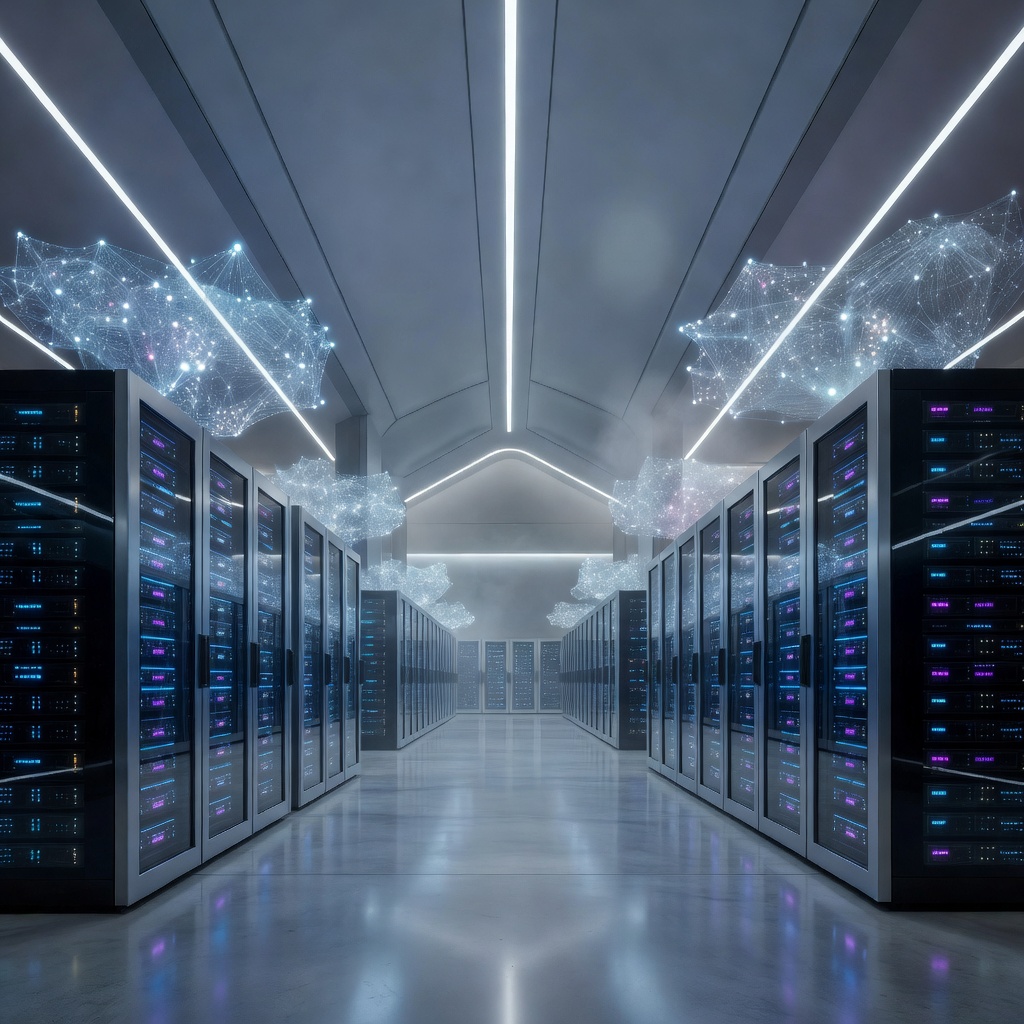
Musk launched xAI with a stated mission that cuts against the grain of most AI lab philosophies: building artificial intelligence that is maximally curious and truth-seeking rather than sanitized for palatability. Grok, the company's flagship model now in its third major iteration, has been making measurable gains in reasoning benchmarks, and Musk has been vocal about xAI's Colossus supercomputer cluster in Memphis being one of the most powerful AI training facilities ever assembled, with plans to expand it further.
In recent commentary, Musk has articulated a view that the AI race is not primarily about who has the cleverest algorithm, but about who commands the most compute and the highest quality data pipelines. This is a more grounded framing than the mystical narratives that sometimes surround AI development. It also explains why xAI's integration with X (formerly Twitter) matters strategically: access to real-time human discourse at scale is a training data asset that few competitors can replicate.
The tension Musk navigates here is genuine. He has warned publicly, repeatedly, and at times almost obsessively, about the existential risks of misaligned AI. Yet he is simultaneously racing to build the most powerful AI systems possible. His argument is that if powerful AI is inevitable, it's better to have safety-conscious actors at the frontier than to cede that ground. Critics argue this logic is self-serving. Supporters argue it's pragmatic. The honest answer is probably that it's both, and that the distinction may matter less than the actual technical choices xAI makes as its models grow more capable.
Tesla's Next Chapter: Beyond the Car
Tesla's story in 2025 is not primarily about electric vehicles anymore, and that reframing is itself significant. Musk has been signaling a strategic pivot toward energy storage, autonomous robotaxis, and humanoid robotics as the company's primary growth vectors over the next five years. The Cybercab, Tesla's purpose-built autonomous taxi platform, is slated to enter limited production this year, with Musk claiming full self-driving capability in specific geofenced areas as the launch condition.
The Optimus humanoid robot program has quietly become one of the most-watched projects in the manufacturing world. Musk has stated that Tesla's factories will deploy thousands of Optimus units internally before any commercial sale, treating the factory floor as both a testing environment and a showcase. In recent interviews, he has projected that Optimus could eventually outnumber Tesla vehicles in terms of production volume, a statement that sounds hyperbolic until you consider that the global demand for physical labor automation is measured in the hundreds of millions of units, not thousands.
The engineering credibility here is mixed but improving. Early Optimus demonstrations were underwhelming. More recent footage and capability updates have been substantially more convincing, with the robot performing complex bimanual tasks and navigating unstructured environments with growing reliability. The gap between laboratory demonstration and real-world deployment remains wide, but the trajectory is pointing in the right direction. For manufacturers, logistics companies, and eventually households, the implications of a capable, affordable general-purpose robot are genuinely hard to overstate.
Neuralink: Slow Science, High Stakes
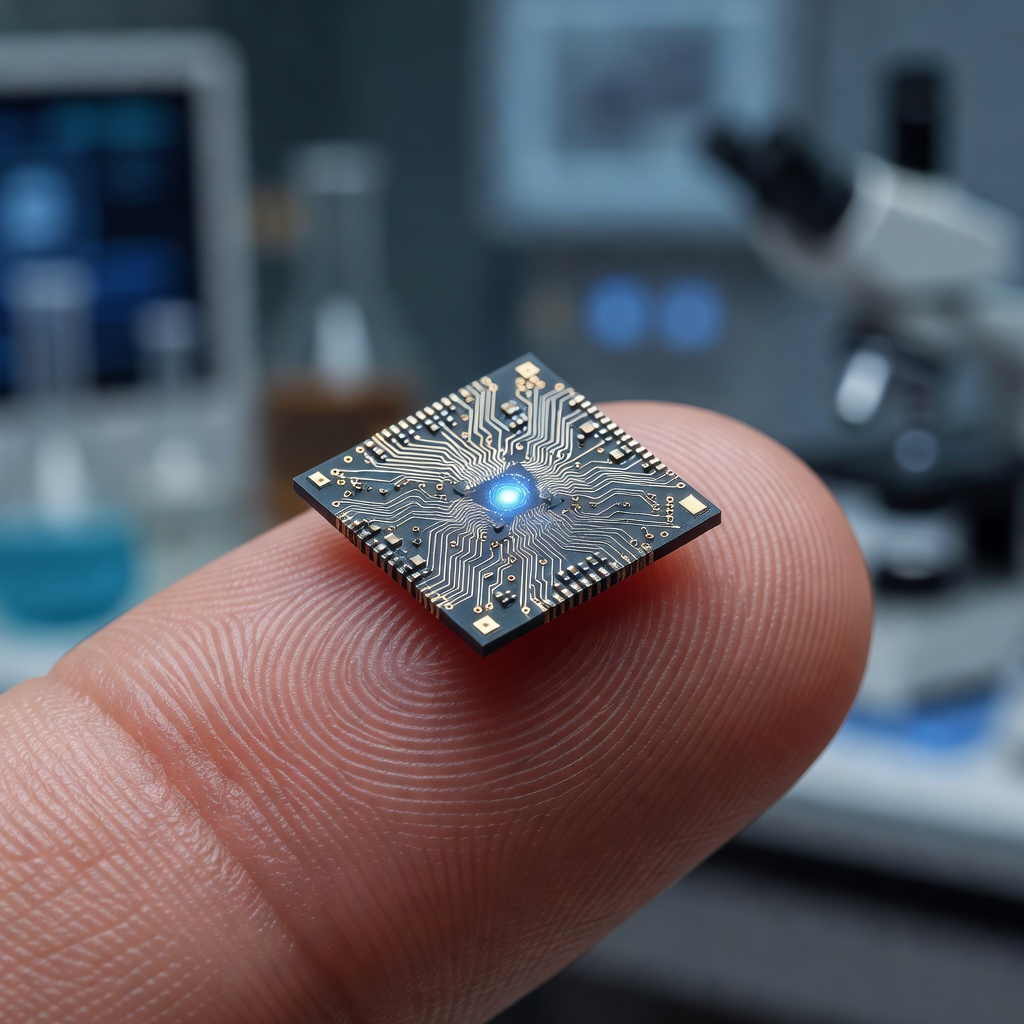
Of all Musk's ventures, Neuralink operates at the most deliberate pace, and appropriately so. Human neuroscience does not compress well under pressure. The company's first human trials have now produced meaningful data, with paralyzed patients demonstrating the ability to control computers, play games, and communicate using thought alone via the N1 implant. Musk has spoken about expanding trial enrollment and advancing toward a second-generation device with higher electrode density and longer battery life.
The long-term vision Musk articulates for Neuralink extends far beyond medical applications. He envisions a future where the bandwidth between human cognition and digital systems is expanded to the point where the distinction between biological and artificial intelligence becomes practically meaningless. This is either the most profound development in human history or a cautionary tale waiting to happen, and the honest answer is that we are too early in the science to know which.
What is clear is that the near-term medical case is strong and growing stronger. Locked-in syndrome, spinal cord injuries, ALS, and severe epilepsy represent a patient population whose quality of life could be transformed by reliable brain-computer interfaces. That alone, independent of any transhumanist horizon, justifies the engineering effort. The fact that it might also eventually redefine human cognition entirely is worth watching with clear eyes rather than either breathless enthusiasm or reflexive alarm.
The Weight of Simultaneity
What distinguishes Musk's current moment from his earlier career chapters is the degree to which all of these ventures are simultaneously approaching critical junctures. Starship is closing in on orbital operations. xAI is scaling compute at unprecedented rates. Tesla is attempting a product portfolio reinvention. Neuralink is gathering clinical evidence. Starlink, often underreported, is now a significant and growing revenue engine for SpaceX, providing satellite internet to tens of millions of users globally and generating the cash flow that funds everything else.
The risks are real and should be named clearly. Regulatory friction, particularly around autonomous vehicles and brain implants, could delay timelines significantly. The political environment in which Musk now operates, given his increasingly visible role in U.S. policy discussions, introduces reputational and operational variables that didn't exist five years ago. Key engineering talent is finite and contested. And the sheer cognitive bandwidth required to drive multiple frontier technology companies simultaneously is a constraint that even Musk's admirers acknowledge cannot be infinitely elastic.
But here is the grounded case for optimism: the underlying engineering across every one of these domains is getting measurably better. Starship flies where it once exploded on the pad. Grok reasons where it once hallucinated. Optimus moves where it once stumbled. Neuralink patients communicate where they once could not. The speed of improvement may be uneven and the timelines may shift, but the direction is consistent. And in technology, direction matters more than schedule.
The world Musk is building toward, one with abundant clean energy, cheap access to space, intelligences that augment rather than replace human thought, and machines that handle the physical drudgery of civilization, is not guaranteed. But it is, increasingly, plausible. And plausibility, at this scale, is already something remarkable.
George Russell
Tech journalist covering Elon Musk’s companies for over 10 years.