The Ghost in the Plasma: SpaceX's Unsolved Reentry Problem Could Decide the Fate of Mars Colonization
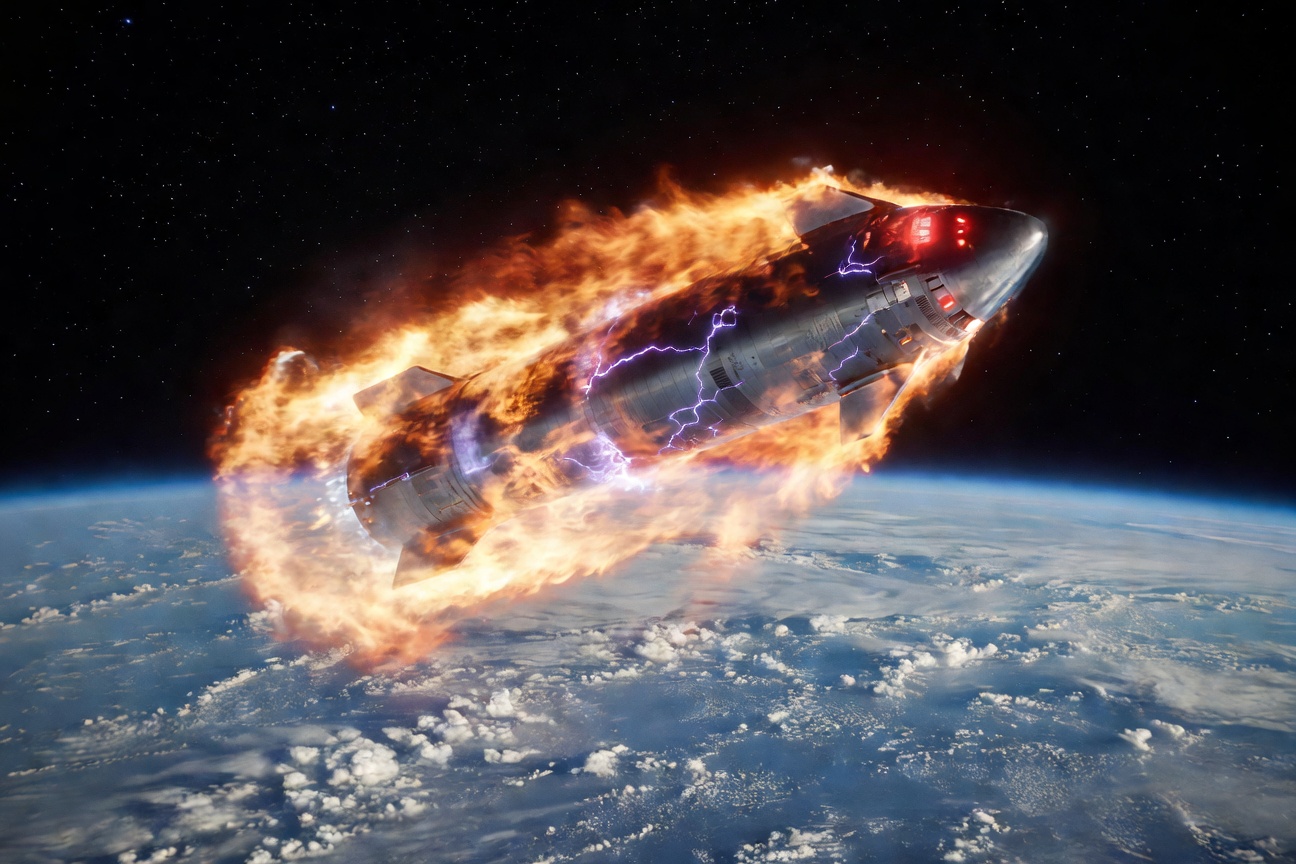
Somewhere above the Pacific Ocean, at roughly 60 kilometers altitude, traveling at nearly 25 times the speed of sound, Starship disappears. Not physically, not permanently, but in every measurable, communicable, observable sense: it vanishes. The radio goes silent. Telemetry flatlines. Ground controllers at SpaceX's Hawthorne command center watch their screens and wait, trusting math and metallurgy, because there is nothing else to trust. This is the plasma blackout, and it has haunted aerospace engineers since the first blunt-nosed capsules of the 1960s punched back through Earth's atmosphere. Six decades of rockets, six decades of increasingly brilliant engineers, and we still cannot fully predict, model, or eliminate it. Now, with Starship serving as the linchpin for NASA's Artemis lunar return, a prospective Mars colonization architecture, and arguably the most audacious transportation system ever conceived, this unsolved ghost in the plasma is no longer a scientific curiosity. It is a civilizational bottleneck.
What the Fire Actually Is
To understand why the blackout persists as a genuine open problem, you first need to appreciate the violence of reentry on a physical level. When Starship descends belly-first into Earth's atmosphere at hypersonic velocity, the air in front of it cannot get out of the way fast enough. Instead of parting cleanly, that air is compressed almost instantaneously into a sheath of plasma, a state of matter where electrons are ripped free from their parent atoms and exist as a chaotic, electrically charged soup. Temperatures in this plasma layer routinely exceed 3,000 degrees Celsius. The shockwave is so intense it outpaces the vehicle's own heat shields in terms of thermal energy radiated outward.
Radio waves, which are electromagnetic radiation like visible light, interact catastrophically with free electrons. Specifically, when signal frequency drops below what physicists call the plasma frequency of the surrounding electron cloud, the waves are reflected rather than transmitted. The vehicle is effectively wrapped in a mirror that blocks outgoing telemetry and incoming commands simultaneously. GPS, communications, remote abort signals, all of it: stopped. The plasma layer acts like a Faraday cage built from atoms moving at relativistic fractions of their thermal limits.
This much is understood. What remains stubbornly, frustratingly unresolved is the precise behavior of that plasma under real-world flight conditions. The plasma is not uniform. It eddies, fluctuates, and develops localized density variations that current computational models handle with acknowledged imprecision. The geometry of Starship, far larger than any previous reusable vehicle, generates plasma dynamics that have never been empirically characterized at scale. SpaceX is, in a very real sense, flying through physics that has not yet been written down with sufficient confidence to stake billions of dollars and human lives on it routinely.
Why Starship Makes the Problem Worse Before It Gets Better
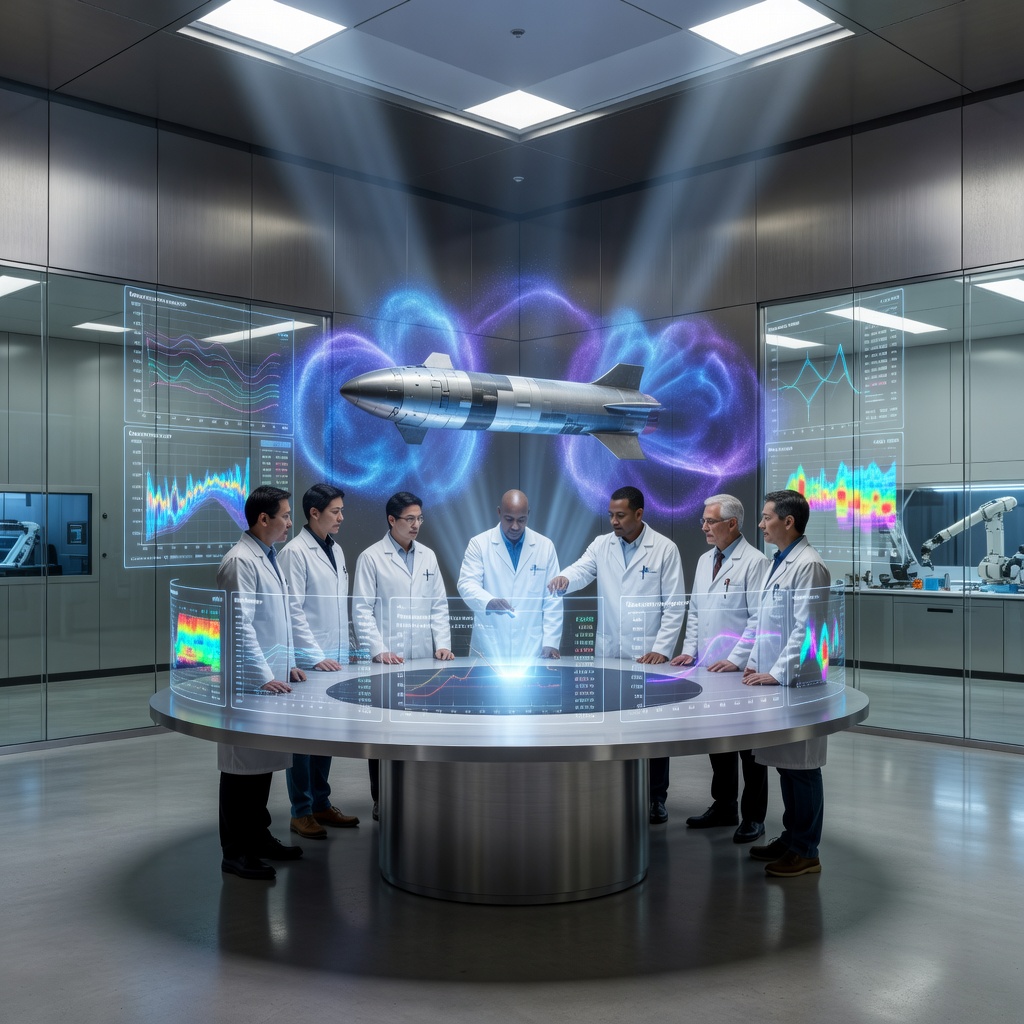
Previous vehicles that dealt with plasma blackout, Mercury, Gemini, Apollo, the Space Shuttle, even the Soyuz capsules still operating today, were all comparatively small. The Space Shuttle's blackout lasted roughly 12 minutes. Starship, with its 9-meter diameter and belly-flop reentry profile, presents a dramatically larger cross-sectional area to the oncoming atmosphere. Preliminary analyses suggest the blackout window could extend significantly longer, and the plasma sheath could be considerably denser and more turbulent than anything previously measured in operational flight.
There is also an entirely new variable: the heat shield tiles themselves. SpaceX has been iterating furiously on Starship's hexagonal ceramic thermal protection system, losing tiles on test flights, redesigning attachment mechanisms, and experimenting with tile geometry to improve coverage around the vehicle's complex curves. Each tile configuration subtly changes the local airflow at the vehicle surface, which in turn changes how the plasma boundary layer develops. What engineers call the "transpiration" layer, the thin transitional zone between hot plasma and relatively cooler vehicle surface, behaves differently depending on tile surface roughness, gaps between tiles, and outgassing characteristics of the ceramic material under thermal stress. All of these variables feed into plasma density models that are already working at the edge of their validated range.
SpaceX's iterative development philosophy, celebrated across the industry for its speed and cost-effectiveness, runs directly into a wall here. You cannot simply iterate your way through plasma physics at hypersonic scale without extensive instrumented flight data. And collecting that data requires flying through the blackout, which is precisely the condition that makes collecting data difficult. It is a feedback loop with a blind spot baked into its center.
The Artemis Complication
This would be a purely academic problem if Starship were only flying cargo to low Earth orbit. But NASA has selected the Starship Human Landing System as the vehicle that will return American astronauts to the lunar surface under the Artemis program. That mission profile introduces a reentry scenario that makes the standard Earth return blackout look manageable by comparison.
Lunar return trajectories bring a crewed vehicle back to Earth at roughly 11 kilometers per second, compared to the 7.8 kilometers per second typical of orbital reentry. That additional velocity is not marginal. Kinetic energy scales with the square of velocity, meaning a lunar return vehicle carries roughly twice the kinetic energy that must be shed through atmospheric braking. The plasma generated is hotter, denser, and lasts longer. For Apollo, the communications blackout during lunar return lasted approximately three to four minutes, and flight controllers accepted it as an operational reality. For a Starship-class vehicle returning from the Moon with crew aboard, preliminary estimates suggest the blackout period could be measurably longer, with plasma behavior in a regime that has essentially zero flight heritage.
NASA and SpaceX engineers are not ignoring this. There are active research threads exploring higher-frequency transmission systems that might pierce thinner regions of the plasma envelope, as well as antenna placement strategies designed to exploit the vehicle's geometry to find "windows" of lower electron density. Trailing antenna systems, essentially long cables that drag behind the vehicle into plasma-free air, have been proposed and studied for decades but have never been operationally implemented. Magnetohydrodynamic flow control, using magnetic fields to actively shape the plasma, remains theoretically attractive but practically undemonstrated at Starship scale.
Mars Amplifies Everything
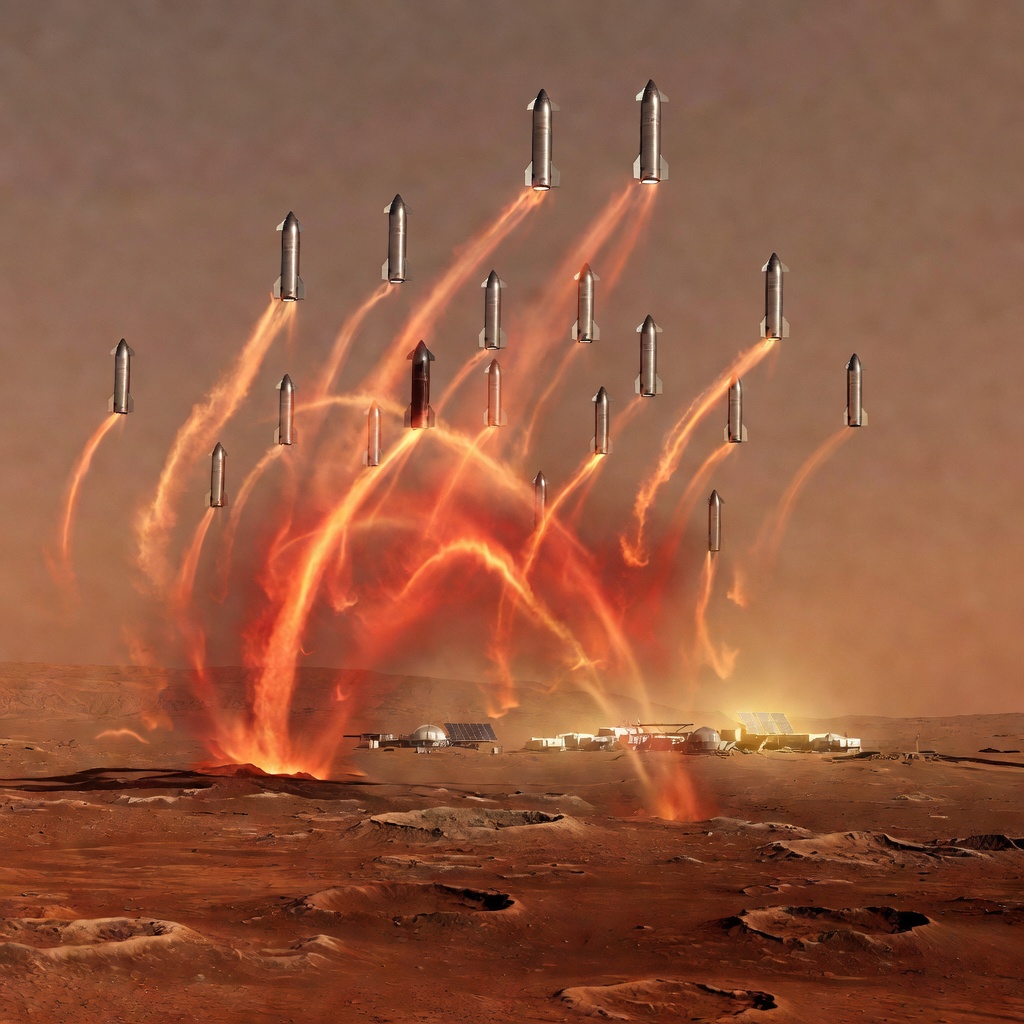
If Earth reentry is the unsolved problem, Mars entry is the unsolved problem inside a puzzle inside an enigma. The Martian atmosphere is roughly 1% the density of Earth's at sea level, composed almost entirely of carbon dioxide. Entry vehicles must travel much deeper into that thin atmosphere before generating sufficient aerodynamic drag to slow down meaningfully. The plasma physics of CO2-dominated plasma are genuinely different from the nitrogen-oxygen plasma generated during Earth reentry. Electron collision frequencies differ. Recombination rates differ. The spectral characteristics of radio absorption differ. And unlike Earth, where decades of shuttle and capsule flights have built up an empirical database, Mars entry data consists of a handful of robotic missions, none of which were large enough to generate the plasma regime that a crewed Starship would encounter.
Elon Musk's publicly stated architecture calls for fully autonomous Starship landings on Mars well before any crewed mission, which would theoretically provide flight data to characterize the plasma environment. But the instrumentation required to measure electron density, temperature profiles, and radio transmission windows during actual Mars entry is itself an engineering challenge. You cannot phone home from inside the blackout to report what the blackout looks like from inside.
Starlink as an Unexpected Asset
Here is where the story takes an unexpected structural turn. SpaceX's Starlink constellation, now exceeding 6,000 operational satellites and generating the revenue that funds Starship development, may inadvertently contribute to solving the blackout problem it has nothing to do with causing. Researchers have proposed using the dense low-Earth-orbit network as a passive radio observatory, precisely measuring how signals from Starlink satellites are distorted or blocked as they pass through the plasma sheath of a reentering Starship. By triangulating signal disruption patterns across multiple satellites observing the same reentry from different angles simultaneously, it might be possible to tomographically reconstruct the three-dimensional electron density map of the plasma envelope in near-real-time.
This approach has never been operationally deployed. It would require software coordination between Starlink's satellite network and Starship's flight operations that does not currently exist. But the theoretical foundation is solid, and the asset base, thousands of precisely positioned radio transceivers in stable orbits, is uniquely available to SpaceX and nobody else. It is a case where the sheer scale of Musk's overlapping ventures creates a solution pathway that a single-mission-focused agency simply could not access.
The Mystery That Must Be Solved
There is something philosophically uncomfortable about humanity's most ambitious transportation system depending, at its most critical moments, on a phenomenon we understand imperfectly. Every Starship reentry is, on some level, a controlled experiment in applied plasma physics, gathering data that refines models that will eventually, iteratively, close the gap between what we can predict and what actually happens in that luminous, silent envelope of superheated gas.
That process works. SpaceX has demonstrated, across dozens of Falcon 9 booster recoveries and multiple Starship integrated flight tests, that iterative empirical development can accomplish what clean-sheet theoretical design cannot. But plasma blackout occupies a specific category of problem where the iteration cycle has a hard limit: you cannot observe the thing you most need to observe while the observation window is closed.
Until that ghost in the plasma is named, mapped, and tamed, every reentry of every Starship, whether it is returning from Starlink deployment, from a lunar orbit, or eventually from a 7-month transit from Mars, will contain a chapter that no one on the ground can read in real time. For robotic missions, that is an operational constraint. For crewed missions to the Moon and Mars, it is the open question that will define whether the most ambitious chapter in human exploration gets written on schedule, or gets rewritten by physics that refused to cooperate on humanity's timeline.