The City Beneath the City: How Tunnel Transit Could Redraw Urban Life by 2040
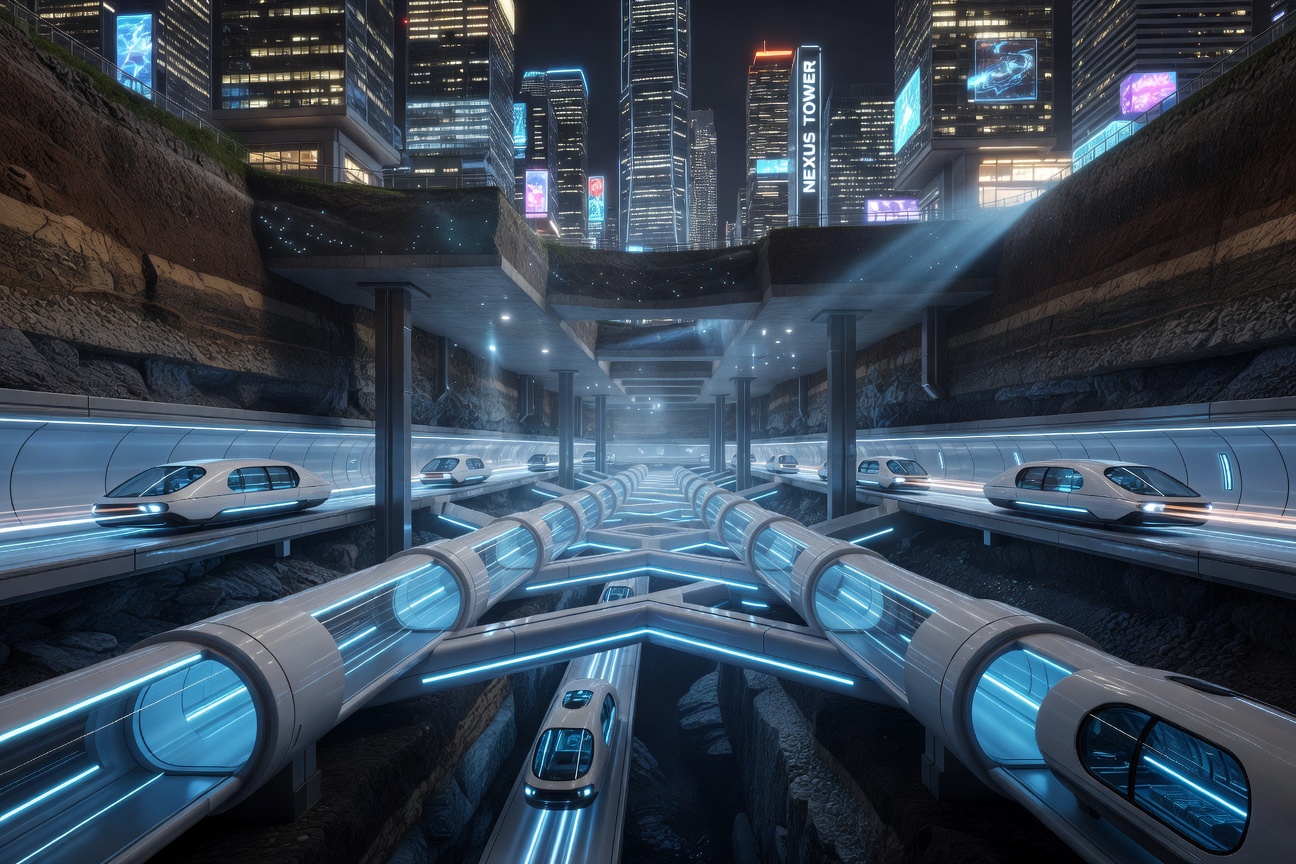
Imagine buying a home thirty miles from your office not because you want a long commute, but because your commute no longer exists in any meaningful sense. You descend into a neighborhood portal, slide into a climate-controlled electric pod, and arrive at your destination in eleven minutes. No traffic signals. No lane changes. No weather. The city above you is still gridlocked, but you are somewhere else entirely, moving through a parallel geometry of speed and silence. This is not science fiction. It is the logical endpoint of a transit philosophy that Elon Musk's The Boring Company began stress-testing beneath the Las Vegas Convention Center in 2021, and the implications of that experiment, if it scales, are almost too large to map.
The Premise Is Deceptively Simple
Most transit revolutions in history have been surface-level affairs, literally. Railways cut through prairies. Highways bifurcated neighborhoods. Even elevated rail, for all its ambition, still occupied the same contested horizontal plane as everything else humans built. Underground transit flips the entire logic of urban competition for space. It proposes that cities can grow outward and inward simultaneously, expanding their footprint on the surface while threading a hidden circulatory system beneath it.
The Vegas Loop, currently the most operationally mature expression of The Boring Company's vision, runs beneath the Las Vegas Convention Center and extends toward several resort properties on the Strip. It is modest by metropolitan standards, a proof-of-concept dressed in neon. But the contracts already awarded and the corridors already surveyed suggest that the company is building toward something categorically different: a tunneled urban mesh that could, within fifteen years, rival traditional transit in coverage while surpassing it in speed and granularity of access.
What does that future actually look like, and more importantly, what does it do to the cities above it?
The Zoning Revolution Nobody Is Talking About
Urban planners have spent decades debating transit-oriented development, the theory that building dense, walkable neighborhoods around train stops increases ridership and reduces car dependency. It works reasonably well when the transit is reliable. But the model has a structural ceiling: it clusters density around fixed nodes, creating expensive, overcrowded hubs surrounded by underserved voids.
A tunnel mesh changes the topology of that problem. If access points, called portals in Boring Company terminology, can be placed with far greater flexibility than subway stations, and at a fraction of the surface disruption, then the transit-accessible zone stops being a ring around a hub and becomes something more like a fabric. Every block within a networked tunnel grid becomes, in principle, transit-adjacent. The premium that proximity to a subway stop currently commands in real estate could dissolve, redistributed across a much wider geography.
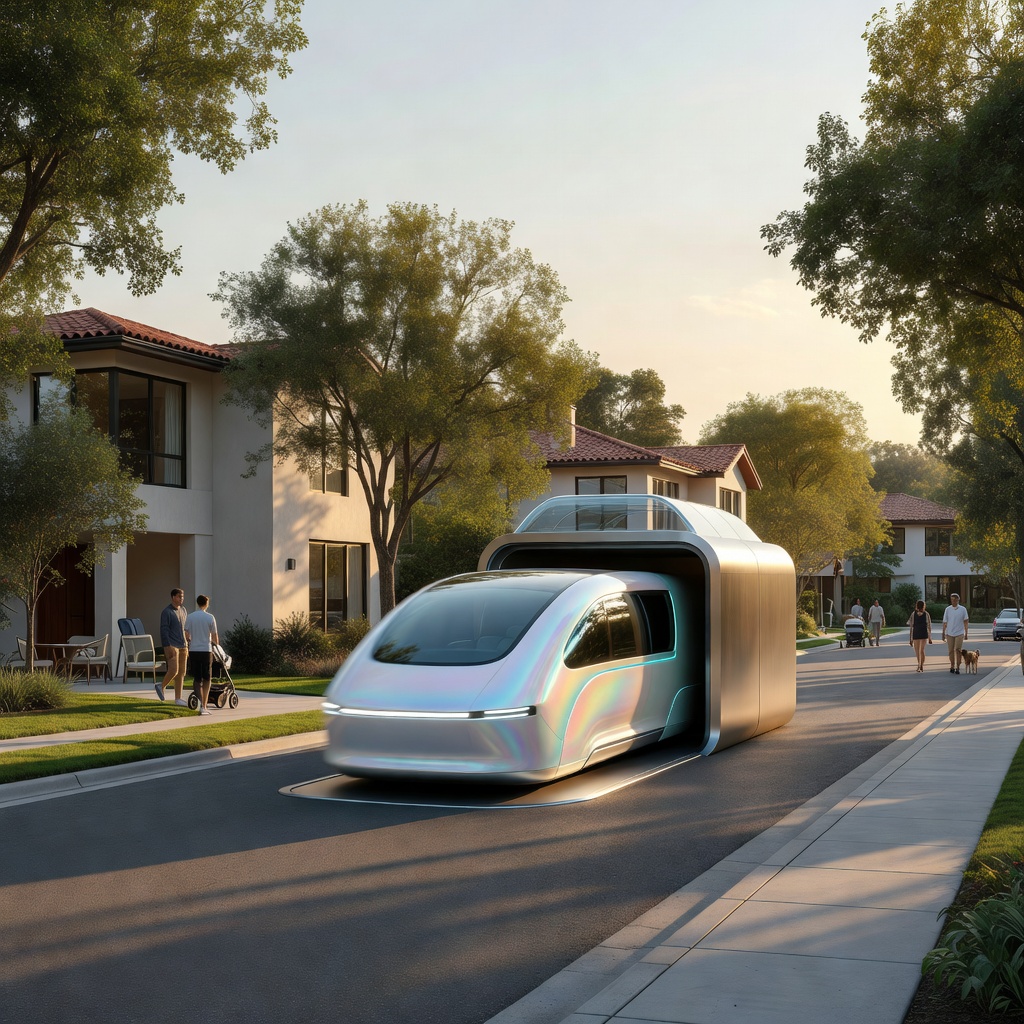
Real estate economists have barely begun modeling this scenario, because it requires accepting premises that still feel speculative. But consider what happened to land values in cities that built subway extensions into previously car-dependent suburbs. The effect was immediate and dramatic. Now consider an infrastructure that does not require tearing up streets for years, that can branch and reroute with geological rather than political constraints, and that operates vehicles autonomously at speeds incompatible with mixed surface traffic. The real estate implications alone could justify the entire construction cost, a dynamic that private tunnel operators are presumably already pricing into their expansion mathematics.
Speed as a Social Equalizer
There is a social justice dimension to this technology that rarely gets the attention it deserves. In virtually every major American city, the relationship between transit access and economic opportunity follows a cruel gradient. The further you live from quality transit, the harder it is to reach well-paying jobs, the more of your income evaporates into car ownership, and the more time you lose to commuting. This is not accidental. It is the fossilized residue of decades of infrastructure investment decisions that favored mobility for some over access for all.
A tunnel network that lowers the cost of extending coverage, and that can be financed through usage fees rather than solely through public bonds, introduces a different set of incentives. If the marginal cost of adding a new tunnel branch drops significantly as boring technology improves, and The Boring Company has consistently argued that it will, then underserved neighborhoods become economically attractive expansion targets rather than afterthoughts. Speed equity, the idea that everyone in a metropolitan area should have access to fast transit, becomes an achievable engineering goal rather than a political aspiration.
Critics will correctly note that private infrastructure has historically found ways to exclude those who cannot pay. That tension is real and unresolved. But the architectural possibility of a transit system that is cheap enough to extend everywhere, and fast enough to make everywhere worth extending to, is genuinely new. It deserves serious engagement rather than reflexive skepticism.
What Happens to the Surface?
Perhaps the most transformative, and least discussed, downstream effect of mature tunnel transit is what it could do to the streetscape above. The single largest consumer of urban land in most American cities is not housing, not parks, not commercial space. It is infrastructure devoted to moving and storing cars. Roads, parking structures, surface lots, driveways, turning lanes, and on-ramps collectively consume between thirty and sixty percent of the developed land area in typical Sun Belt cities.
Redirect a meaningful fraction of vehicle trips underground, and the surface begins to breathe. Parking minimums, already under assault from urbanist reformers, become impossible to defend. Street widths designed for peak automobile throughput can be reclaimed for trees, pedestrians, cyclists, outdoor commerce, and the incidental human activity that makes cities worth inhabiting. The tunnel does not just move people faster. It returns the surface to the people.
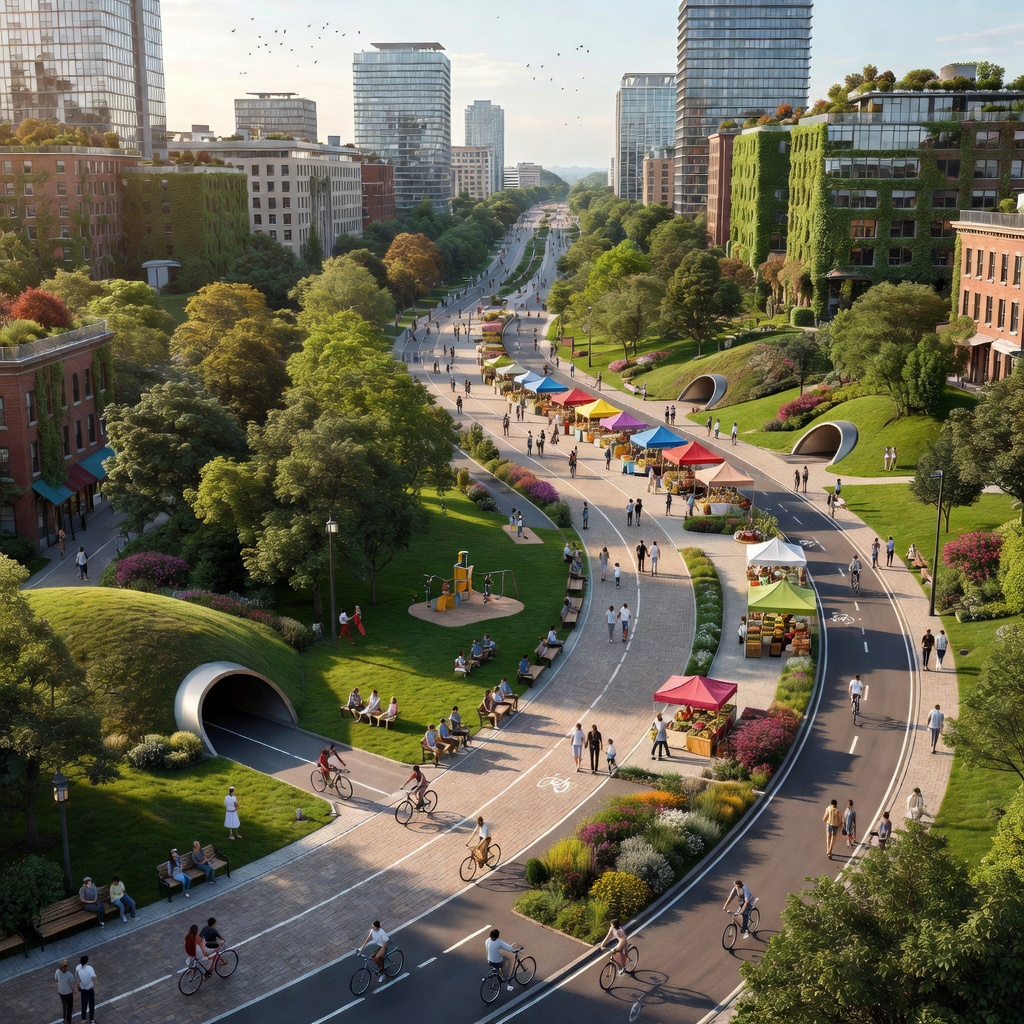
This is where the speculation becomes genuinely vertiginous. Urban designers have long fantasized about car-free city centers. The political obstacles have always been immovable, because eliminating surface roads without providing a credible alternative simply transfers congestion rather than resolving it. Tunnel transit, operating in a physically separate layer, is precisely that alternative. Not a fantasy substitute, but an engineered parallel system capable of absorbing the load.
The Autonomy Multiplier
None of this reaches its full potential without autonomous vehicles, and this is where The Boring Company's position within the broader Musk technology portfolio becomes strategically significant. Tesla's autonomous driving program and the tunnel network are not parallel projects that happen to share a billionaire. They are interdependent components of a system that only achieves its theoretical throughput when human reaction times are removed from the equation.
In a fully autonomous tunnel network, vehicles can travel closer together, accelerate and brake with mechanical precision, and navigate branching junctions at speeds no human driver could safely manage. The tunnel becomes less like a road and more like a pneumatic tube, a guided system where the vehicle and the infrastructure form a unified operational unit. Throughput numbers that currently seem modest, and critics of the Vegas Loop have pointed to its per-hour capacity figures with considerable justification, transform under full autonomy into something that challenges conventional rail on its own terms.
The timeline for that convergence remains genuinely uncertain. Regulatory frameworks for autonomous vehicles are fragmented and slow-moving. Public trust in self-driving technology has been eroded by high-profile failures. But the trajectory of both the boring technology and the autonomy stack points toward a crossover moment somewhere in the next decade, and the cities that have begun building tunnel infrastructure now will be positioned to activate that multiplier first.
Building the Invisible City
The history of urban infrastructure is largely a history of things built in public view, celebrated at ribbon cuttings, mourned during construction. The peculiar genius and the peculiar challenge of tunnel transit is that its most consequential work happens where no one can see it. There is no dramatic steel arch rising over a river, no elevated guideway threading through a neighborhood. There is a surface that looks almost unchanged, and beneath it, a new city forming in the dark.
By 2040, a handful of metropolitan areas will have accumulated enough underground tunnel mileage to constitute genuine alternative mobility networks. The cities that bet correctly on which technology reaches scalable cost first, whether that is The Boring Company's approach, traditional heavy rail, or some hybrid not yet publicly announced, will find themselves holding an infrastructure asset of extraordinary long-term value. The cities that waited for certainty will be repaving parking lots and wondering what they missed.
The dirt beneath our feet has always been the last unclaimed frontier of city-building. The machines are already down there, turning it into something new.