Follow the Money to Mars: The Hidden Web of Grants, Rivalries, and Conflicts Shaping SpaceX's Research Ecosystem

When a SpaceX Starship prototype ignites its Raptor engines and punches through the atmosphere over Boca Chica, Texas, the world watches in awe. The livestreams rack up millions of views. The memes multiply. Elon Musk posts a rocket emoji. What nobody is watching, in that same moment, is a quieter and arguably more consequential spectacle: dozens of university labs, federally funded research centers, private contractors, and competing aerospace firms furiously racing to publish the findings that will define whether Starship's ambitions are scientifically credible, technologically sound, or dangerously premature. And every single one of them has a stake in the answer.
This is the research ecosystem that surrounds SpaceX. It is not a clean, dispassionate scientific community producing objective truths from sterile laboratories. It is a marketplace of competing interests, where grant money flows toward politically palatable conclusions, where methodological disputes are sometimes more about market position than methodology, and where the line between independent expert and paid consultant can blur into invisibility. Understanding who funds the science of Mars colonization, Artemis lunar missions, and Starlink's orbital dominance is essential to understanding what we actually know versus what we have been encouraged to believe.
The NASA-SpaceX Funding Loop and Its Scientific Distortions
Start with the most obvious entanglement. NASA has awarded SpaceX billions in contracts: Human Landing System awards for Artemis lunar missions, Commercial Crew contracts that have made the agency structurally dependent on Falcon 9 launches, and ongoing Starship development milestones tied to future disbursements. The agency simultaneously funds independent research programs tasked with evaluating the safety, viability, and risk profiles of the very vehicles it is paying SpaceX to build. The conflict is institutional and largely undiscussed.
Researchers working within NASA-funded centers acknowledge privately, if not in print, that their grant continuations can depend on producing findings that do not fundamentally threaten program momentum. A research team that publishes a paper concluding that current life support architectures are inadequate for a 6-month Mars transit is doing honest science. A research team that does the same thing and simultaneously holds a NASA cooperative agreement worth $4 million tends to frame that conclusion with extraordinary diplomatic softness. This is not corruption in any legal sense. It is structural gravity, bending the output of science toward the preferences of the funding body.

The Artemis program offers a particularly sharp example. Multiple peer-reviewed studies examining lunar dust toxicity, radiation accumulation at the lunar surface, and the adequacy of proposed habitat shielding have been published in the past two years. Some are robustly alarming. Others are notably more reassuring. A careful audit of author affiliations reveals a striking pattern: the more reassuring papers cluster around institutions with active NASA partnership agreements or active bids for hardware contracts related to Gateway or surface systems. The alarming ones tend to emerge from European research groups, independent academic centers, or occasionally retired NASA scientists no longer dependent on future contract awards. Correlation is not causation, but in an investigative context, it is a mandatory question.
The Starlink Science Machine: Who Is Validating the Validator?
Starlink's research ecosystem operates with a different flavor of conflict. SpaceX has invested heavily in cultivating a body of scientific literature supporting the network's utility for disaster response, remote education, maritime safety, and developing-world connectivity. These use-case papers are largely legitimate. Starlink does work. The methodological problem is in what the funded research ecosystem studiously avoids examining with equal rigor: interference effects on ground-based astronomy, orbital debris accumulation timelines, spectrum congestion dynamics, and the long-term atmospheric chemistry implications of the metallic particles produced during satellite reentry at scale.
An emerging body of research from astronomers and atmospheric scientists is raising increasingly urgent questions about Starlink's reentry byproduct problem. When aluminum-bodied satellites burn up at end-of-life, they deposit alumina particles into the stratosphere. With Starlink's constellation approaching and exceeding thousands of active satellites, and with SpaceX's own filings projecting a next-generation constellation of tens of thousands, the cumulative deposition could, according to some models, rival or exceed certain industrial pollution inputs at stratospheric altitude levels. The research on this is genuinely uncertain. But the funded research examining Starlink's benefits is abundant. The funded research examining Starlink's atmospheric costs is sparse, underfunded, and predominantly authored by scientists outside the SpaceX funding orbit.
When the International Astronomical Union and various national astronomy bodies raised formal concerns about satellite constellation interference, the scientific counterarguments defending Starlink's trajectory came predominantly from researchers with existing relationships to the commercial space industry. This does not make their arguments wrong. It does make the debate structurally imbalanced in a way that the popular press almost never interrogates.
The Starship Testing Methodology Dispute Nobody Is Reporting
Inside aerospace engineering circles, a genuine and heated methodological dispute has been quietly simmering about how SpaceX conducts its Starship development and what the iterative test-to-failure philosophy actually proves or fails to prove about long-duration mission readiness. Traditional aerospace methodology, embodied by legacy contractors like Boeing, Northrop Grumman, and Lockheed Martin, demands extensive pre-flight modeling, ground-based simulation, and conservative flight test envelopes before hardware is exposed to full operational stress. SpaceX's approach treats hardware destruction as data collection, compressing timelines by accepting early failures as acceptable inputs to the design loop.
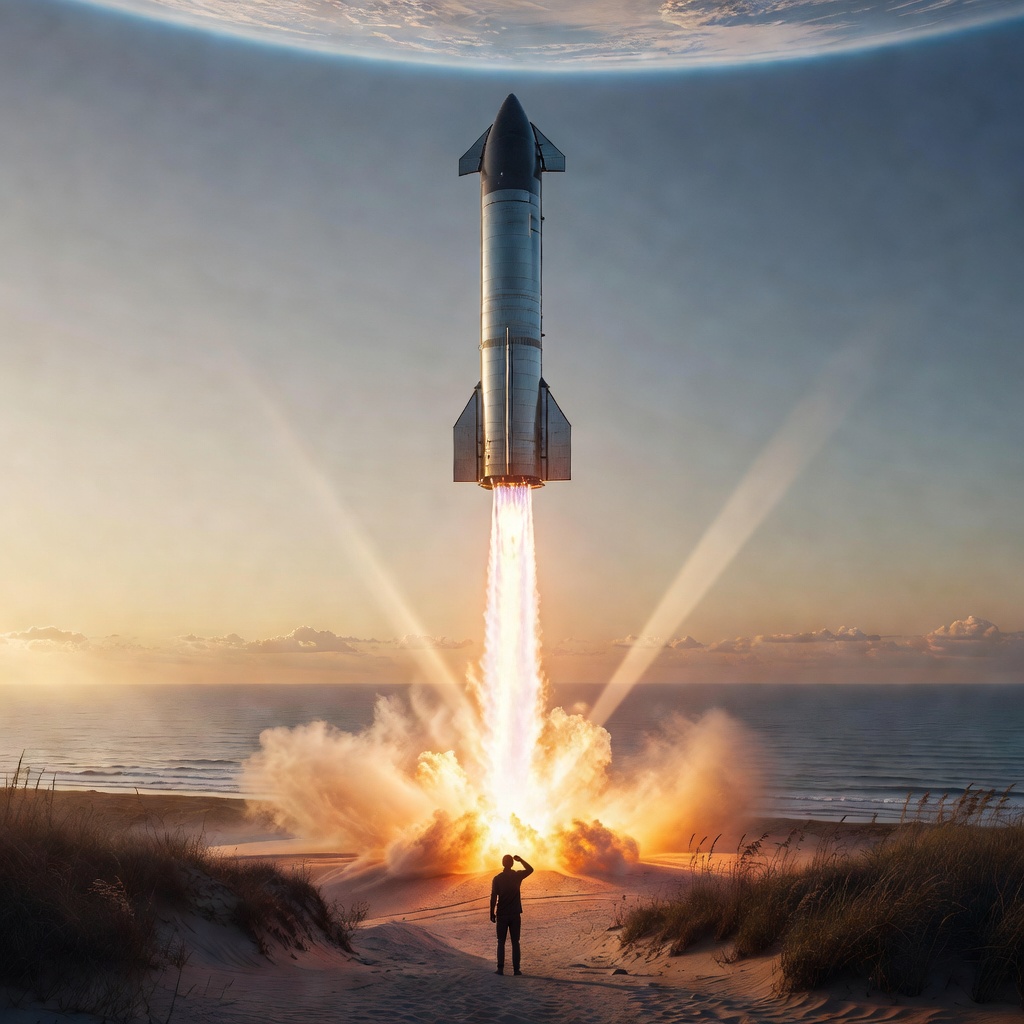
The dispute matters enormously for crewed Mars missions. An uncrewed cargo Starship that fails spectacularly is a learning event. A crewed Starship that fails between Earth and Mars is a catastrophe with no rescue option. Critics within the aerospace safety research community argue that SpaceX's methodology, while brilliant for achieving rapid capability milestones with uncrewed hardware, has not yet demonstrated the kind of statistical reliability data needed to certify vehicles for long-duration crewed deep-space operations. The threshold typically cited for human spaceflight is a loss-of-crew probability below 1-in-270 missions. SpaceX has not published its internal reliability estimates for Starship in crewed configuration, and independent researchers attempting to calculate that figure from public test data face a fundamental problem: the sample size of full-stack integrated flights remains small.
Here is the conflict-of-interest layer that makes this debate especially murky: the researchers most prominently publishing reassuring assessments of Starship's crewed safety trajectory include multiple individuals who serve as paid consultants to SpaceX or hold equity in SpaceX-adjacent ventures. Meanwhile, the researchers publishing more cautious assessments are often affiliated with institutions that compete for NASA contracts with SpaceX, introducing skepticism about their motivations from the opposite direction. The result is a scientific debate where almost every credible voice has a financial relationship that colors their conclusions, and no genuinely neutral arbiter exists at sufficient technical depth to adjudicate between them.
Mars Colonization Research: Optimism as a Funding Strategy
The Mars colonization research ecosystem deserves its own chapter in any honest account of hidden incentives. Research funding for Mars-relevant science flows from NASA, from private foundations, from SpaceX itself through selective university partnerships, and increasingly from the emerging commercial Mars advocacy organizations that Musk's public enthusiasm has catalyzed into existence. What these funding sources share is a strong preference for research that identifies pathways to success rather than research that quantifies the probability of catastrophic failure.
Psychological research on extended isolation, for instance, remains severely underfunded relative to the mission timelines SpaceX is proposing. The longest-duration Mars analog missions have involved crews of six or fewer individuals in surface habitats for periods up to eight months, conducted in conditions that are psychologically demanding but physically safe, with Earth communication maintained and emergency evacuation available. Real Mars missions will involve crews communicating with Earth under a 20-minute signal delay minimum, facing lethal radiation and depressurization risks with no rescue option, for durations of 18 to 30 months. The psychological research that would actually inform mission planning for those conditions is, frankly, years behind the engineering research, largely because the engineering research attracts corporate and government funding while the human behavioral research sits in academic departments competing for modest NIH or NSF grants.
Researchers in this space describe a funding landscape where the question "can humans psychologically survive a Mars mission?" receives far less institutional enthusiasm than "how do we build a Mars habitat?" The former is harder to answer reassuringly on a timeline useful to program momentum. The latter produces hardware that can be photographed and featured in funding presentations.
What Honest Accounting Looks Like
None of this means SpaceX's programs are fraudulent or that the science supporting their ambitions is fabricated. Starlink demonstrably provides connectivity where none existed. Starship's engineering achievements are real and extraordinary. Artemis represents a genuine return to lunar ambition with credible technical foundations. The Mars dream is not delusional, even if the timeline Musk projects should be understood as aspiration rather than engineering forecast.
What it does mean is that the public, the policymakers, and the press corps that covers this beat owe it to themselves and their audiences to look harder at who is funding the research they cite, what questions that funding systematically discourages, and where the methodological debates that receive almost no mainstream coverage are actually substantive and important. The rockets are extraordinary. The incentive structures surrounding the science that validates them deserve the same scrutiny we would apply to pharmaceutical research funded by the companies manufacturing the drugs.
SpaceX is almost certainly going to launch humans toward Mars within the next decade or two. When that happens, the quality of the science that preceded it, including the uncomfortable findings that funding structures tried to muffle, will be the difference between history's most triumphant expedition and its most avoidable tragedy. The time to ask hard questions about the research ecosystem is not after the first crewed Starship clears the launch tower. It is now, while the answers can still change the outcome.